
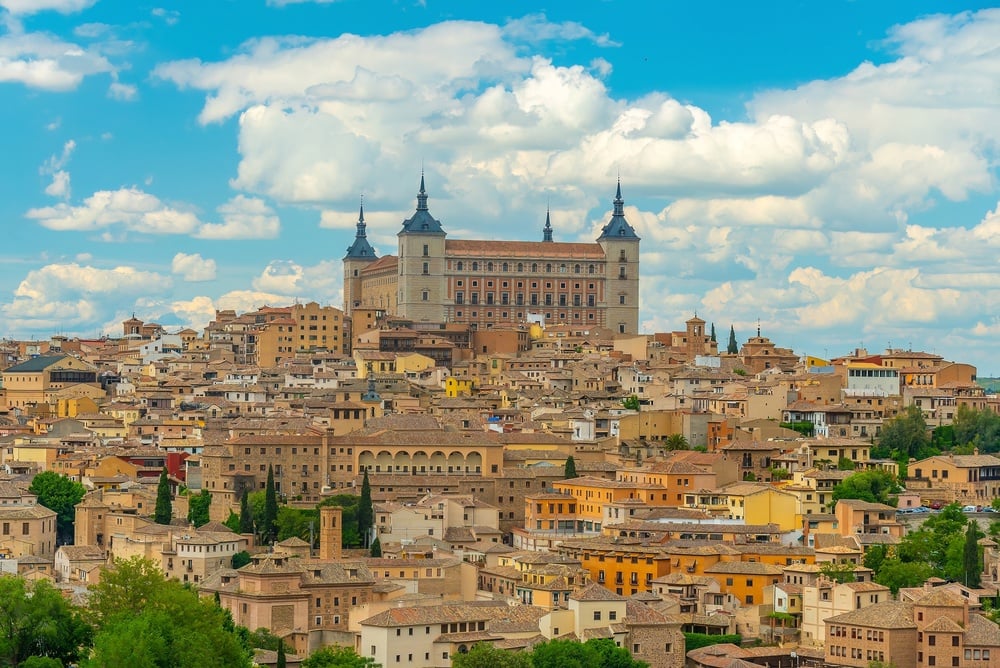
13 Best Cities to Visit in Spain: North & South
Find inspiration, guides and stories for wherever you're going
13 Best Cities to Visit in Spain: North & South
Plan Your TripIt’s hard deciding which are the best cities to visit in Spain. Madrid and Barcelona are the obvious choices. Then you have Sevilla, Granada, Valencia, Bilbao, San Sebastián and many more! Andalusian gems, Basque food, historical and cultural centers all over Spain, a country that rewards exploring multiple cities in one trip.
In this guide, we will present you with our picks of the best cities to visit in Spain. We will talk about all regions and offer some less-known but very worthy options as well.
Let’s get into it!
Quick Answer: The Best Cities to Visit in Spain at a Glance
First, a quick comparison table to help you get some quick answers before diving more deeply into each city.
| City | Region | Best For | Ideal Trip Length |
| Madrid | Central Spain | Art museums, nightlife, tapas | 2 - 3 days |
| Barcelona | Catalonia (Mediterranean) | Gaudí architecture, beaches | 3 - 4 days |
| Seville | Andalusia (South) | Flamenco, Moorish palaces | 2 - 3 days |
| Granada | Andalusia (South) | The Alhambra, free tapas | 2 days |
| Córdoba | Andalusia (South) | Mezquita, patios, day trips | 1 - 2 days |
| Málaga | Andalusia (South Coast) | Picasso, Costa del Sol, beaches | 1 - 2 days |
| Valencia | Mediterranean Coast | Paella, City of Arts and Sciences | 2 days |
| San Sebastián | Basque Country (North) | Pintxos, La Concha beach | 2 days |
| Bilbao | Basque Country (North) | Guggenheim, modern architecture | 1 - 2 days |
| Santiago de Compostela | Galicia (Northwest) | Camino pilgrimage, seafood | 1 - 2 days |
| Toledo | Central Spain | Medieval old town, day trip | 1 day |
| Segovia | Central Spain | Roman Aqueduct, fairytale Alcázar | 1 day |
| Salamanca | Castile and León | Golden sandstone, oldest university | 1 - 2 days |
Quick picks by traveler type:
Best Cities to Visit in Spain for First-Time Visitors
The best cities to visit in Spain for first timers are Madrid, Barcelona and Seville, a three-city combination that perfectly introduces travelers to the culture & history of Spain. Though, if the Alhambra is among your must-see's then you may replace Seville with Granada.
Choosing these three cities is a great idea not only because they balance each other geographically but also because it is quite easy to get from one city to another by train. Spain's high-speed AVE network connects Madrid to Barcelona, making the journey in only about 2 hours and 30 minutes. It takes about the same time to travel from Madrid to Seville. You can see the world-class museums in Madrid, experience Gaudí's modernism in Barcelona, and get to know the Moorish heritage plus flamenco in Seville.
Best Cities to Visit in Southern Spain (Andalusia & the South Coast)
Most of the best cities to visit in southern Spain are located in Andalusia, the southernmost autonomous community of the country. The distinctive features of this area are the almost 800 years of Moorish influence, a warm and dry climate compared to the north, flamenco music which originated in the Romani communities of the area, and a tapas culture so strong that small dishes and sherry are an essential part of life there.
Seville
A trip to Seville offers the classic Andalusian experience.
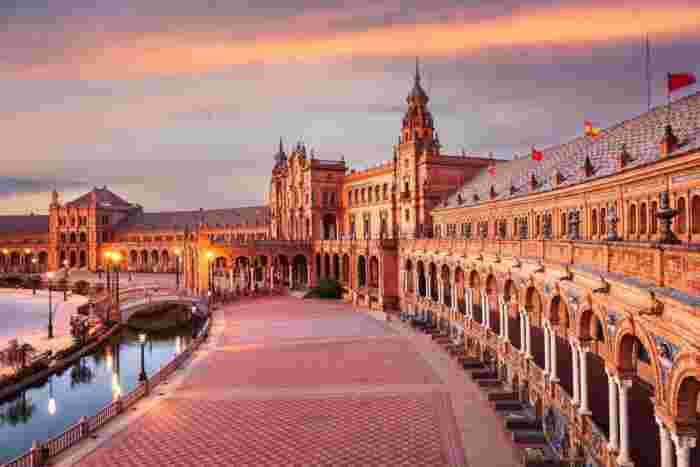
Seville is the capital of Andalusia and the city with the most tourists in southern Spain. The main attraction here is the Royal Alcázar, a palace complex listed as a World Heritage Site by UNESCO, that was started in the 10th century and is still the residence of the Spanish royal family. It is the oldest royal palace still in use in Europe. Not far from there, the half-moon-shaped Plaza de España, built for the 1929 Ibero-American Exposition, is a popular spot where people come to see the tiled alcoves with the maps and coats of arms of all the Spanish provinces.
Seville is the city most connected to the origins of flamenco, and places like Casa de la Memoria regularly present authentic performances in the old Jewish quarter of Santa Cruz, which is a labyrinth of whitewashed streets and orange tree-filled patios. Schedule 2 - 3 days, preferably not during July-August: temperatures in summer can even go over 40°C.
Granada
Granada is located at the base of the Sierra Nevada mountains, and it boasts Spain's most popular monument, the Alhambra. The Nasrid palace-fortress earned the title of a UNESCO World Heritage Site in 1984 and has a daily visitor limit, so grabbing tickets during high season should be done weeks ahead of time.
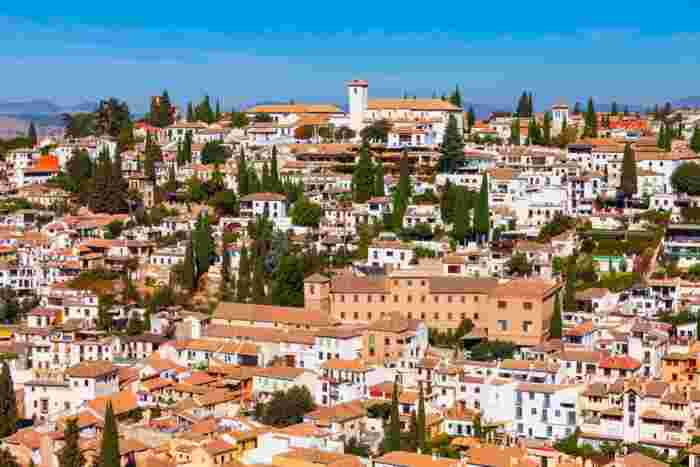
On the other side of the valley is Albaicín, Granada's old Moorish quarter and a maze of streets with cobbled paths and viewpoints that have been inscribed on the UNESCO list. The Mirador de San Nicolás offers a viewpoint with a view of Alhambra. Granada's fame extends to its free tapas with every drink you order in many bars in the historic center. A custom rare in the rest of Spain. Two full days is the right amount of time.
Córdoba
In the 10th century, Córdoba served as the capital of Moorish Spain and was briefly the largest city in Europe. The city's most iconic monument is the Mezquita, a mosque-cathedral listed by UNESCO as a World Heritage Site. It is famous for its 850 double-arched columns, which make it one of the most remarkable religious buildings in the world.
The Mezquita is surrounded by the old Jewish quarter (Judería) characterized by whitewashed alleys and flower-filled patios. In early May the Patios Festival takes place, when private courtyards are opened to the public for two weeks. This practice was declared by UNESCO as Intangible Cultural Heritage in 2012. One or two days are sufficient for Córdoba. It is also a perfect day trip from Seville as the AVE train takes only 45 minutes.
Málaga
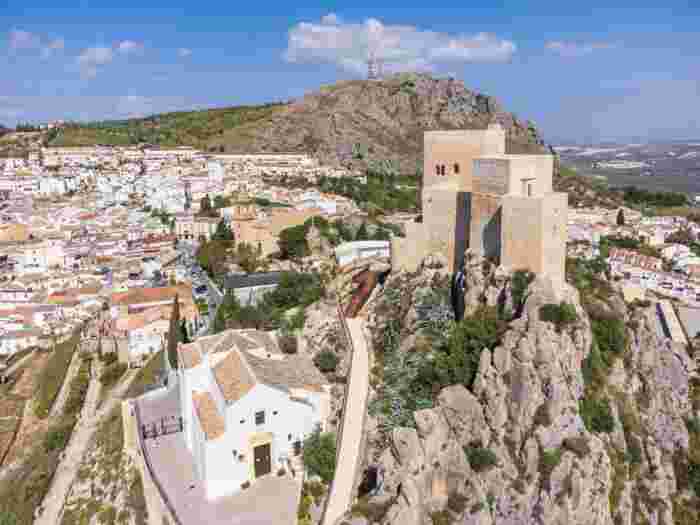
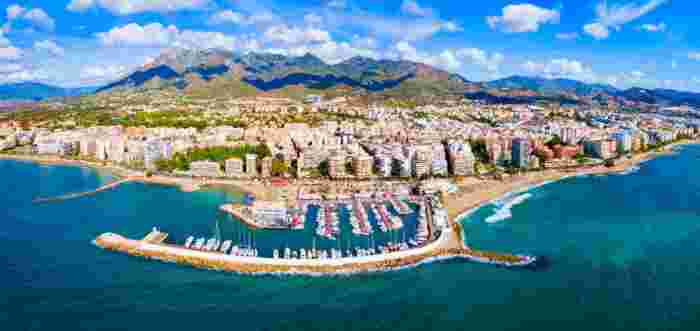
Málaga is the main gateway to the Costa del Sol and the most accessible beach city in southern Spain, with its own international airport and direct AVE links to Madrid in 2 hours 30 minutes. It is Pablo Picasso's birthplace, and the Museo Picasso Málaga in the old town displays 285 of his works, donated by his family.
Just above the city, the Alcazaba, a Moorish fortress dating back to the 11th century, leads to the Roman amphitheatre below through a walled path, combining 2,000 years of history in one visit. Málaga has transformed itself into an art center over the last ten years, with Centre Pompidou Málaga and Carmen Thyssen Museum, both being inaugurated in 2011. Reserve one to two days.
Best Cities to Visit in Northern Spain (Basque Country, Galicia & the Greens)
Northern Spain is very different from the rest of the country. The climate is cooler and greener, with Atlantic instead of Mediterranean weather. The people speak Basque (Euskara) in the Basque Country and Galician in the northwest, alongside Spanish. The local culinary tradition is heavily reliant on seafood and the pintxos, tiny bites held together with a toothpick and eaten while standing at the bar, unlike the tapas tradition of the south.
San Sebastián
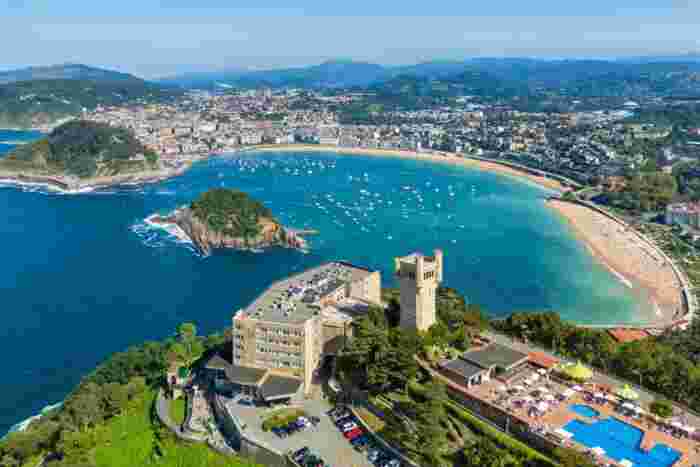
San Sebastián or Donostia in Basque, is located at the bottom of a shell-shaped bay in the Basque Country. It is considered by many as one of the top food destinations in the world. The crescent of La Concha beach curves through the city center of San Sebastián and it is flanked by Monte Igueldo and Monte Urgull.
The food is the main attraction here. San Sebastián is home to 19 Michelin-starred restaurants, one of the highest concentrations per capita in the world. This also includes Arzak and Akelarre, restaurants with three Michelin stars! If you are in the mood for something lighter and informal, the Parte Vieja or Old Town, is where pintxos is king. Places like Borda Berri, La Cuchara de San Telmo, and Bar Néstor are some of the must-visit spots for anyone who loves a good bar crawl. Two days should be more than enough.
Bilbao
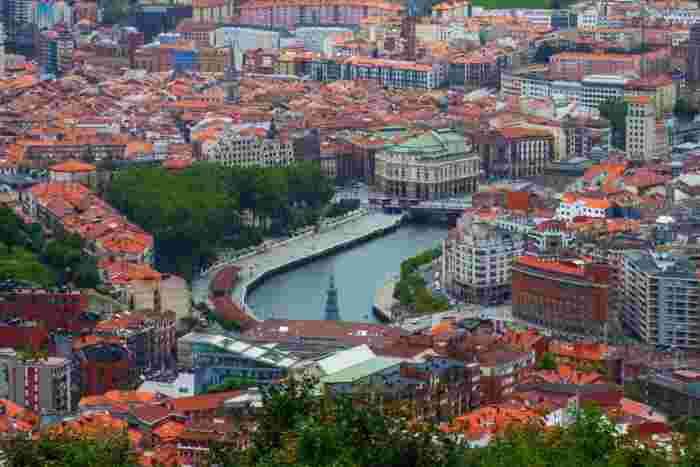
Bilbao's transformation is considered one of the best urban regeneration stories in Europe. An industrial port in decline during the 1980s, the city made a change in 1997 with the opening of the Guggenheim Museum, Frank Gehry's titanium-clad masterpiece which attracted more than a million visitors in its first year and started what urban planners now refer to as the "Bilbao Effect."
Besides the Guggenheim Museum, the city is worth a slow walk. Casco Viejo (old quarter) is a small area of seven streets where pintxos bars are usually packed late into the night, and Mercado de la Ribera, one of the largest covered markets in Europe, is the heart of the city's food culture. Be sure to visit Azkuna Zentroa, a cultural center by Philippe Starck in a converted wine cellar. A day or two is enough.
Santiago de Compostela
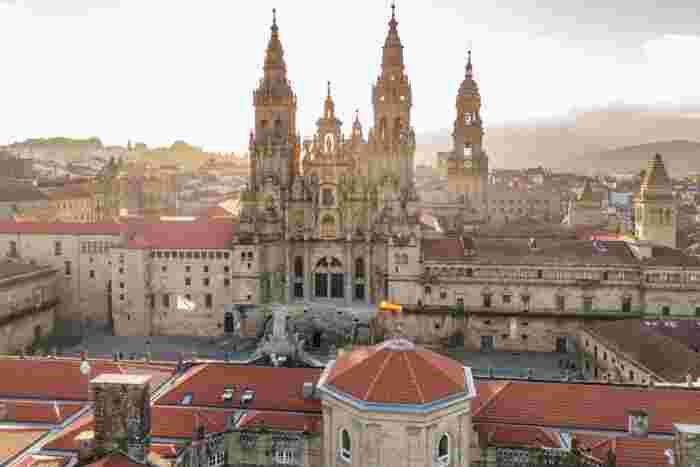
Santiago de Compostela is not only the capital of Galicia but also the end point of the Camino de Santiago, a pilgrimage route that originated in the Middle Ages and attracts more than 400,000 walkers and cyclists every year. The pilgrimage culminates at the Cathedral of Santiago, which is a Romanesque gem and a World Heritage Site by UNESCO. It was consecrated in 1075 and erected over the tomb considered to be of the apostle Saint James.
The historic district around the cathedral itself has been recognized as a World Heritage Site by UNESCO. It is filled with granite pavements and restaurants specializing in seafood. The gastronomy of Galicia is very much dependent on the sea as the source of most of the ingredients: pulpo a la gallega (octopus seasoned with paprika and olive oil), percebes (goose barnacles), and Albariño wine. A day or two is sufficient to get a glimpse of the main sights.
Best Cities to Visit in Central Spain (Madrid & Beyond)
Central Spain's main geographical feature is the meseta, a dry plateau which is responsible for the region's hot summers, cold winters, and expansive, open landscapes. Madrid is located right in the middle of this area and serves as the main AVE high-speed rail hub of Spain, connecting the capital with several historic cities that can be reached within an hour: Toledo in 33 minutes, Segovia in 27 minutes, and Salamanca in 1 hour 35 minutes. So, central Spain is probably the region of the country where it is most convenient to combine a major city with one or two day trips.
Madrid
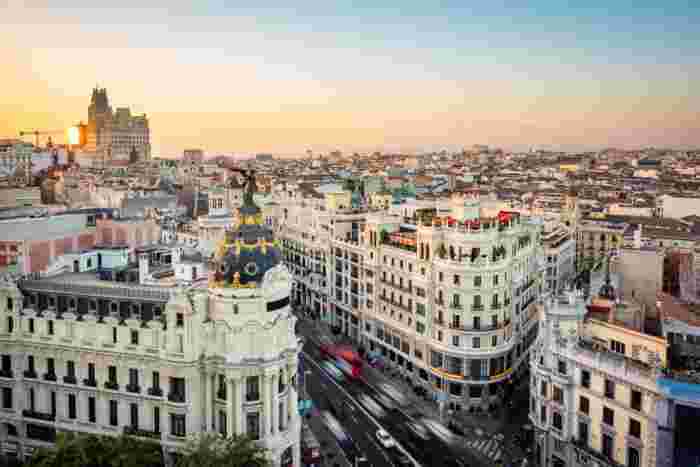
A trip to Madrid is perfect for anyone interested in museums, historic neighborhoods and Spain's late-night food culture.
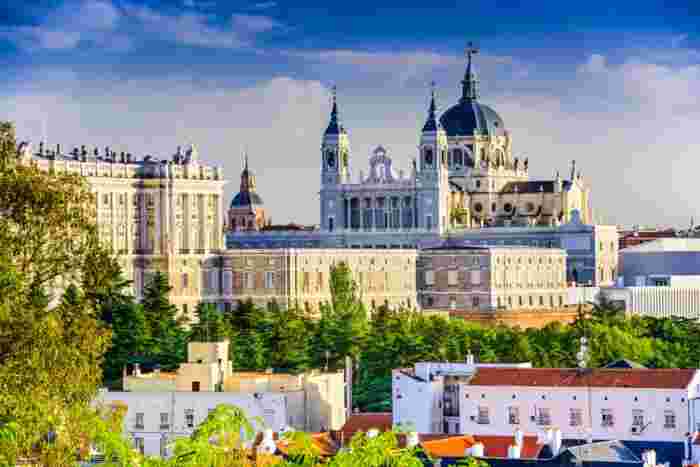
Madrid scored 9 globally for art and culture in Time Out's 2026 worldwide survey, with 91% of residents saying that the city's cultural scene is "good" or "amazing" (24,000 locals polled in 150-plus cities). Besides this, it was declared the best European destination for 2026.
The city's anchor is the Golden Triangle of Art: the Prado Museum (Velázquez, Goya, El Greco), the Reina Sofía (where you can find Picasso's Guernica), and the Thyssen-Bornemisza. All of them are within walking distance from one another. Beyond these museums, Plaza Mayor is the historic heart of old Madrid, El Retiro Park features 350 acres of greenery and boats for rent, and Gran Vía, Madrid's equivalent to Broadway, is always lively with theaters and rooftop bars. You should set aside at least two to three days, even more if you want to explore the food scene.
Toledo
A trip to Toledo is one of the best ways to experience Spain's layered medieval history in a single compact city.
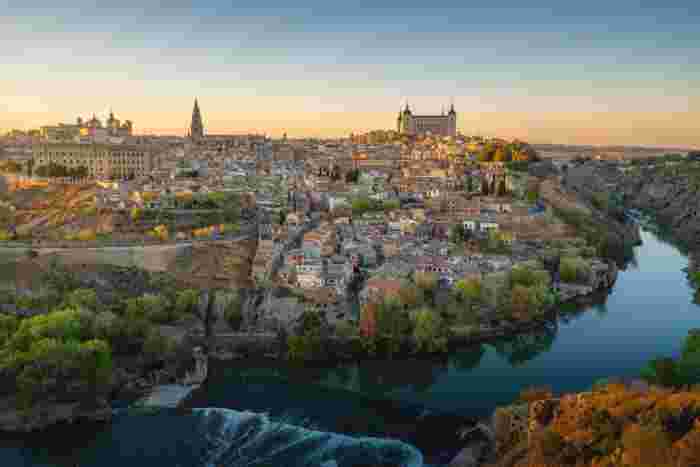
Due to centuries of Christian, Muslim and Jewish communities living side by side together in Toledo, people have also referred to it as the "City of Three Cultures". These architectural legacies still define the medieval old town. Thus, the entire historic center has been a UNESCO World Heritage Site since 1986.
The artist El Greco called this place his home and worked here for most of his career. His Burial of the Count of Orgaz is still at the Iglesia de Santo Tomé, exactly where he painted it in 1586. The Cathedral of Toledo, the Synagogue del Tránsito, and the Alcázar on the hill top, can all be seen within one day. If you leave Madrid by the high-speed train, you will get to Toledo in 33 minutes, so it is the easiest day trip in Spain.
Segovia
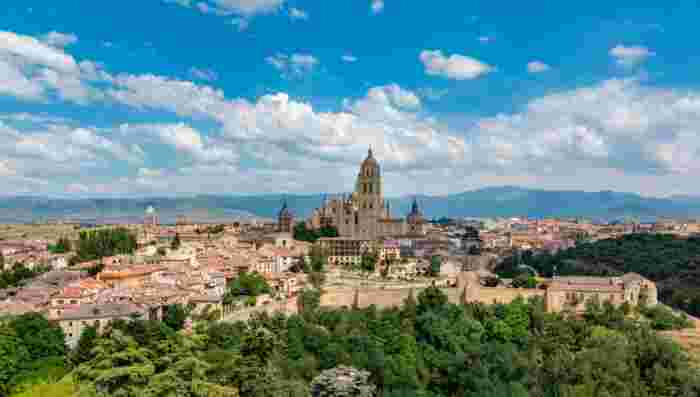
Segovia city is centered on one of the most remarkable Roman masterpieces in Europe: a 1st-century aqueduct, which extends 818m across the city, and at some points reaches a height of 28m. All this was done without using mortar. In 1985 it was recognized as a UNESCO World Heritage Site.
At the opposite side of the old town is the Alcázar of Segovia, a fairytale fortress that many believe is the inspiration for Disney's Cinderella castle. Make sure you try the cochinillo asado (roast suckling pig), a dish that defines Segovia, and you can find it in old places like Mesón de Cándido. The trip from Madrid to Segovia by high-speed train is 27 minutes, making it a popular day trip alternative to Toledo.
Salamanca
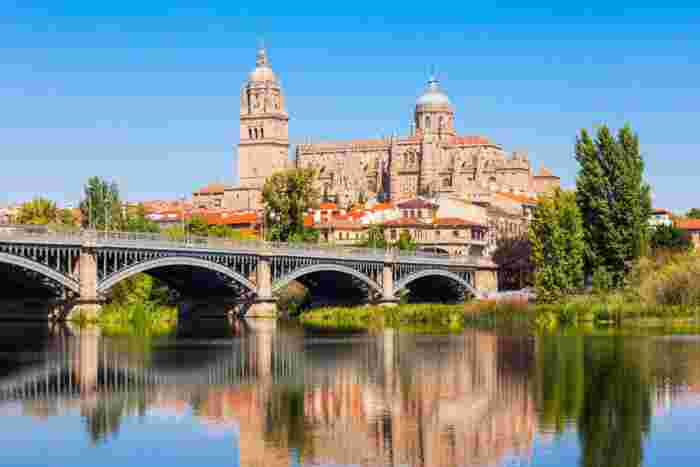
Salamanca is called "La Ciudad Dorada" (Golden City), because the warm sandstone of the buildings makes the city shine at sunset. The whole old town has been a UNESCO World Heritage Site since 1988.
The University of Salamanca lies right in the middle of the city. It was established in 1218, and it is the oldest university in Spain and one of the four oldest in the world still in operation. The stone facade is full of sculptures and hides a tiny frog perched on a skull. Spotting it is a local tradition said to bring good luck on exams. Also, visit the Plaza Mayor, often referred to as Spain's most beautiful main square, and the Old and New Cathedrals located beside each other. Spending one or two days here is sufficient.
Best Cities to Visit on Spain's Mediterranean Coast
A trip to Spain becomes far more rewarding when you combine different regions, from the Mediterranean coast to Andalusia and the green north. Andalusia is Spain's main driver of tourism. Catalonia by itself had 20.1 million visitors from other countries in 2025, which is a record that no other region in Spain can match. The two cities featured here are the major landmarks of the coast. One is known for its architecture and the other for its cuisine.
Barcelona
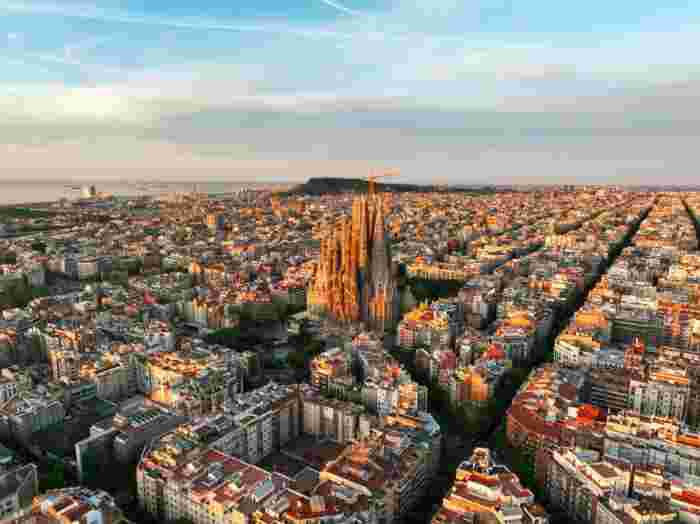
A trip to Barcelona is ideal for travelers who want to combine world-famous architecture, beaches and nightlife in one destination. The city's character has been profoundly influenced by one architect: Antoni Gaudí, whose seven edifices here are jointly recognized as a UNESCO World Heritage Site. Sagrada Familia, Gaudí's never-completed basilica, under construction since 1882, is expected to finish in 2026, the centenary of his passing. Park Güell has the city's most photographed mosaic terrace and Casa Batlló on Passeig de Gràcia is the cornerstone of the modernist showcase known as the Block of Discord.
Besides Gaudí, the Gothic Quarter (Barri Gòtic) keeps the medieval essence of Barcelona through a narrow and winding street network, surrounding the 14th-century Barcelona Cathedral. The city also features urban beaches. Barceloneta can be reached on foot from the old town, making Barcelona ideal for family travel in Spain, thanks to its mix of beaches, walkability and cultural attractions. You should allocate three to four days.
Valencia
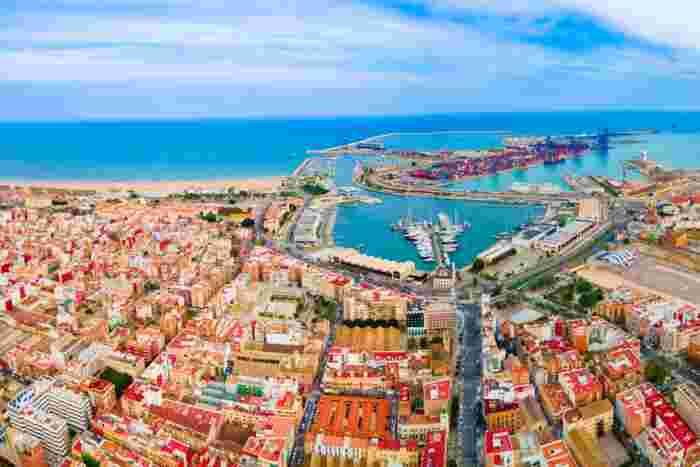
Valencia is the third most populous city in Spain and gateway to the Albufera wetlands, one of the highlights of nature and wildlife in Spain. For the authentic paella valenciana, which has chicken, rabbit, and green beans instead of seafood, go to traditional restaurants in El Palmar district or the Ruzafa neighborhood.
The most eye-catching landmark is the City of Arts and Sciences, a futuristic complex by Valencia-born architect Santiago Calatrava, housing an aquarium, science museum, and opera house. It is located in the Turia Gardens, a 9km linear park created in the dried riverbed of the old Turia, which was diverted after the disastrous 1957 flood. If you are there around mid-March, Las Fallas, Valencia's festival of giant satirical sculptures burned on the last night, is one of Spain's most spectacular events and is listed by UNESCO. Two days is the right amount of time.
Other Spanish Cities Worth Considering
If you have more than two weeks or you're returning to Spain, a handful of smaller cities reward the detour:
How to Choose the Right Cities for Your Spain Trip
If you're planning a trip to Spain, combining multiple cities by high-speed train is one of the easiest ways to experience the country more deeply.
For a quick 3-day trip, focus on a few iconic things to do in Spain by choosing a base city like Madrid or Barcelona and adding just one nearby day trip (Toledo or Segovia from Madrid, Girona from Barcelona). A 7-day trip will be enough to visit the three famous spots for first-timers: Madrid, Barcelona, and Seville. With 10-14 days, you might include Granada and whichever you like between San Sebastián and Valencia to get a more comprehensive view of the country.
By interest. If you are a foodie, designate San Sebastián and Valencia as your priorities. Those who love history will do better in Toledo and Granada. Lovers of architecture will really enjoy Barcelona and Seville. Travelers who want both the beach and the city will do best in Málaga, Valencia, or Barcelona.
By season. July and August in Andalusia can be harsh. Seville and Córdoba can easily go over 40°C so it makes sense to visit there between October and May. The northern coast (San Sebastián, Bilbao, Santiago) are at their best features from June - September.
Just a practical note. Spain's AVE high-speed rail can quickly connect you over long distances: Madrid to Barcelona will only take you 2 hours and 30 minutes, and the same for Madrid to Seville.
Conclusion
To summarise, the best cities to visit in Spain do not have one sole good answer. It all depends on how much time you have, your specific interests and the season you decide to travel. But, you can always combine multiple cities in one vacation by using Madrid or Barcelona as bases and taking day trips, even if you have only one week.
But, all this might sound like a challenge to plan and organise. Why not let the experts do it for you? Talk to Tailored by Locals, share your interests and how you picture the perfect trip to Spain and a local expert will design an itinerary that will bring your vision to life!