
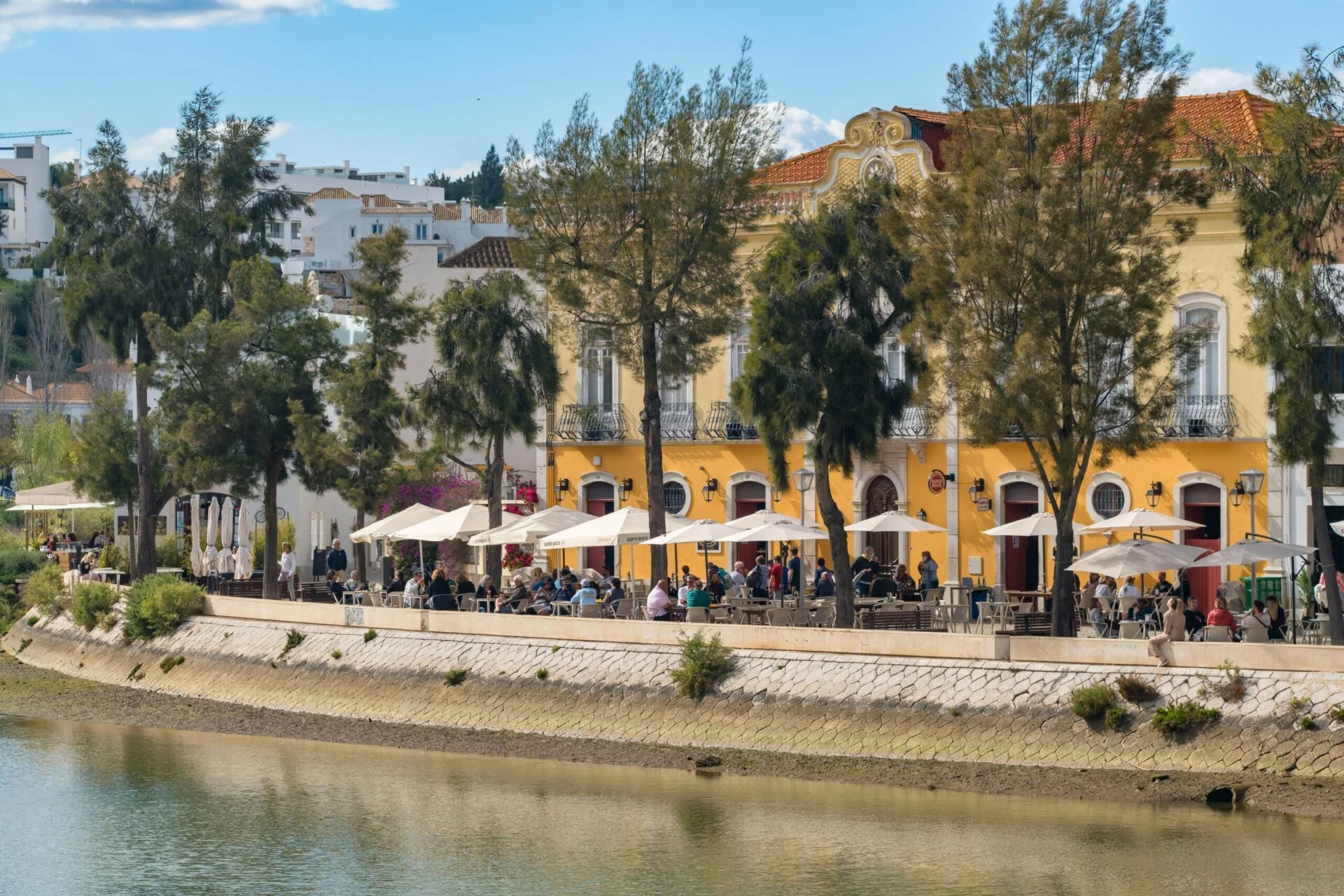
Weather in Portugal in March: Region-by-Region Guide
Find inspiration, guides and stories for wherever you're going
Weather in Portugal in March: Region-by-Region Guide
Plan Your TripThe weather in Portugal in March is starting to look like spring. Temperatures are mild but can change quite often during the day. Average highs on the mainland are 17/19°C (63/66°F) and lows are 8/11°C (46/51°F). The south of Portugal is the warmest region and also the driest one. Porto and the north of the country have the most rainfall in March.
In this guide, we explore the weather across different regions of Portugal. We take a look at the key weather points and average temperatures. We also examine the sea temperatures in March and compare the month to April. Finally, we offer some useful tips on what to pack and some local insider wisdom.

What Is the Weather Like in Portugal in March?
In March, Portugal is warm enough for a T-shirt during the sunniest parts of the day. Mornings and evenings stay coo and there might be the occasional rainfall. All brought in by Atlantic weather systems.
Portugal weather in March follows a clear north-to-south pattern. Temperatures go up and rainfall decreases the further south you travel. Madeira has the mildest nights and the warmest sea in Portugal in March.
Here is a quick overview of the different regions in Portugal:
| Region | Average high | Average low | Rain days | Sea temperature |
| Porto and the north | 17°C (63°F) | 9°C (48°F) | 8 to 12 | 14°C (57°F) |
| Lisbon | 18°C (65°F) | 10°C (51°F) | About 8 | 15°C (59°F) |
| Algarve (Faro) | 19°C (66°F) | 11°C (51°F) | About 5 | 16°C (61°F) |
| Madeira (Funchal) | 19°C (66°F) | 14°C (57°F) | About 10 | 18°C (64°F) |
| Serra da Estrela (Guarda) | 11°C (52°F) | 3°C (37°F) | Frequent | No coast |
Highs and lows for Porto, Lisbon and Faro come from the IPMA climate normals for 1991 to 2020. Rain days are approximate and include days with only light showers.
Averages only tell part of the story, though. Each region has its own character in March, as you will see below.
March Weather in Portugal by Region
March weather in Portugal can change a lot within a three-hour train ride. Here is what to expect in each of the main areas.
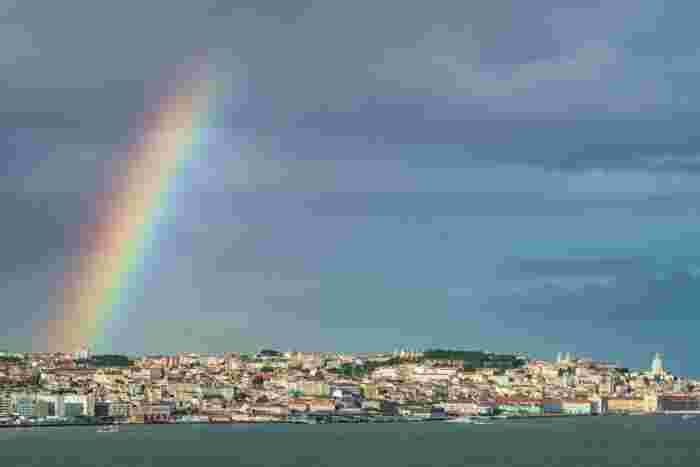
Lisbon Weather in March
How hot is Lisbon in March? Lisbon averages highs of 18.4°C (65°F) and lows of 10.3°C (51°F), based on IPMA data. Hot days are rare, with only about one day a month above 25°C (77°F).
Lisbon, Portugal, weather in March is usually bright, with around 7 hours of sunshine a day. The city’s record for the month is 28.2°C (83°F), set on 31 March 2005.
Expect some wind, especially on the coast toward Cascais and Cabo da Roca. Sintra, up in the hills, is often a few degrees cooler and can sit in mist while Lisbon enjoys the sun.
Weather in Porto in March
The weather in March is typically milder than that in Lisbon, with average highs of 17°C (63°F) and average lows of 8.8°C (48°F). On about a third of days in March, it rains in Porto.
As in Lisbon, showers in Porto tend to arrive in bands from the Atlantic, interspersed with dry and sunny days. It only rarely freezes in Porto and there are occasional warm periods too. The highest temperature ever recorded in March in Porto is 29.1 °C (or 84°F).
Out of town, the Douro Valley will be warming up quickly on sunny days. The vines will be bare, but almond trees will be in full bloom across the upper reaches of the river by the end of February and early March.
Weather in the Algarve in March
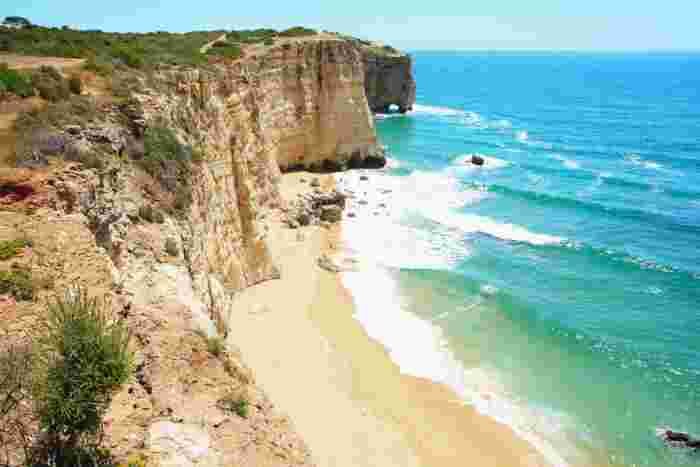
The weather in the Algarve, Portugal, in March is the mildest on the mainland. Faro averages highs of 19°C (66°F) and lows of 10.5°C (51°F), with only about five rainy days.
Bright days are common, and Faro’s record for March is 28.9°C (84°F). The weather suits coastal hikes such as the Seven Hanging Valleys Trail, plus golf and cycling, all classic Portugal adventure travel.
The south coast, from Lagos to Tavira, is sheltered from the north wind. The west coast around Sagres and Aljezur is windier and cooler, with big Atlantic waves.
Weather in Madeira in March
In March, the weather in Madeira is generally more stable than elsewhere in Portugal. In Funchal, it’s usually around 19°C (66°F) by day and 14°C (57°F) by night.
Madeira’s statistics office reports that Funchal averaged 17°C (63°F) in March 2026. However, at Pico do Areeiro (1,818m/5,965ft) it averaged a cool 3.5°C (38°F) during the month, dropping to as low as -3.3°C (26.07°F) on occasions.
On the peak it poured with 723mm of rain in March while in the coast town of Funchal, a very pleasant 212 hours of sunshine were enjoyed. If you are intending to do a levada walk or to go to watch the sunrise from Pico do Areeiro, you will need a warm layer and a rain jacket even if it is sunny down at the coast.
Inland Portugal and the Mountains
While it is mild and pleasant during the day in inland Portugal, the nights can be cold in March. In Évora, for example, it is around 17°C (63°F) in the afternoon, but drops to around 8°C (46°F) at night.
The Alentejo turns green in March and is packed with wildflowers. It’s a great time for a road trip, birdwatching, or other Portugal nature and wildlife experiences.
The Serra da Estrela, Portugal’s highest mountain range, can see snow in March. The highest city in Portugal, Guarda, averages 11°C (52°F) by day at this time. Penhas Douradas recorded -5.3°C (22°F) on the 23rd March 2025.

Where Is It Warmest in Portugal in March?
In Portugal, Madeira is the warmest region in March, with the mildest nights and the warmest sea. The warmest region on the mainland is the Algarve, where Faro is averaging 19°C (66°F) by day in March.
A few degrees less in Lisbon, where it’s around 18.4 degrees during the day and 10.3 degrees at night. The other main areas of Portugal, in terms of temperature in March, are ranked below.
Even during a spring warm spell, it is possible that for a few days the temperature in the inland areas of Ribatejo and Alentejo can be higher than in the coast. The highest temperature recorded on any single day in March was in the inland areas.
Early vs Late March: How the Weather Shifts
March is a month of steady change. Daylight in Lisbon grows by about an hour and a quarter between the first and last day, and average temperatures climb week by week.
That makes early and late March feel like two different trips.
Early March
Lisbon still has a touch of winter in the first half of March, with more frequent rainfall and fresh nights. Big Atlantic storms can also send powerful waves to the west coast of Portugal.
The average high temperature in Lisbon for the first half of March 2026 was between 12°C (54°F) and 20°C (68°F). Good weather for visiting museums, food tours, and even city walks. Most days are quite sunny in the afternoon.

Weather in Portugal in Late March
The weather in late March in Portugal is usually much milder and drier than in the early part of the month. The temperature in Lisbon during the second half of March 2026 ranged from highs of 17°C (63°F) on a few days to 25°C (77°F) on others, with several days reaching 22°C (72°F).
The evenings get longer too. In Portugal, people move their clocks forward on the last Sunday of March. This means that sunset in Lisbon will move from about 7 PM on the Sunday before to about 8 PM on the Sunday after.
Late March is generally better for beach strolls, dinner on the rooftop, and long hikes. In many years, this time also coincides with Easter, which we will describe below.
Why No Two Marches Look the Same
Averages are high because of big differences between years. In March 2025, it was very wet and even cold. The total rainfall in March 2025 was 229% of normal, according to IPMA. Storm Martinho even brought winds up to 169 km/h (105 mph) in Cabo da Roca.
A year later, March 2026 was hot and dry. In Tomar, the last day of the month reached 28.4°C (83°F), the highest temperature reading for the whole of mainland Portugal for that month.
Plan for rain and hope for sunshine. Pack accordingly and leave some room for unexpected changes in your schedule.
Can You Swim in Portugal in March?
Yes, you can swim in Portugal in March if you enjoy the cold. Average sea temperatures for March range from a low of 14°C (57°F) in the north of Portugal (near Porto) to 18°C (64°F) in the south of Portugal (Funchal).
Most locals are not ready for swimming in March and prefer to spend time on beaches for long walks and seafood lunches by the water. In March, surfers will be wearing full wetsuits.
Here are the average sea temperatures in March:
| Coast | Sea temperature | Swim verdict |
| Porto and Viana do Castelo | 14°C (57°F) | Too cold for most |
| Lisbon, Cascais and Ericeira | 15°C (59°F) | Very cold, wetsuit advised |
| Lagos and Portimão | 16°C (61°F) | Cold, short dips only |
| Faro and Tavira | 16°C (61°F) | Cold, short dips only |
| Funchal, Madeira | 18°C (64°F) | Cool, fine for hardy swimmers |
Beaches have no lifeguards in March, since the official bathing season starts in June. If you do go in, stay close to shore and check the sea conditions first. If you would rather have a local match your route to the March weather, Tailored By Locals can build a trip to Portugal around the regions that suit your dates.
By late summer, the best beaches in Portugal warm up to 20 to 24°C (68 to 75°F), especially in the eastern Algarve.
Portugal Weather in March and April Compared
Portugal's weather in March compared to April is a major factor for many travelers. Although the weather in Portugal in April is approximately 1 to 2 degrees warmer than March, with more hours of sunlight, it is not necessarily drier.
In the north, April can bring even more rain than March. Locals know this and refer to it as em abril, águas mil, or a thousand waters in April.
| March | April | |
| Lisbon high / low | 18°C / 10°C (65°F / 51°F) | 20°C / 12°C (68°F / 53°F) |
| Porto high/low | 17°C / 9°C (63°F / 48°F) | 18°C / 10°C (65°F / 50°F) |
| Faro high/low | 19°C / 11°C (66°F / 51°F) | 20°C / 12°C (69°F / 53°F) |
| Sea temperature (Lisbon) | 15°C (59°F) | 15 to 16°C (59 to 61°F) |
| Daylight (Lisbon) | About 12 hours | About 13 hours |
| Rain in the north | Frequent showers | Often more than March |
| Crowds | Low, rising at Easter | Moderate, busier at Easter and on 25 April |
Choose March for lower prices and quieter sights. Choose April for slightly warmer days and greener landscapes, if you don’t mind a few more visitors. If you’re still weighing up dates, the best time to visit Portugal depends as much on your plans as on the weather.
Is March a Good Month to Visit Portugal?
Yes, March is a good time for sightseeing, hiking, and city trips in Portugal. You will get good value for money as the weather is mild and there are not too many people around. Most tourists visit in June, July, and August.
Portugal is not really a beach holiday destination in March. You will find a warmer sea and constant sunshine in June, July, August, and September.

Crowds and Prices in March
It’s low season in March, so hotels in the Algarve will charge lower rates, and you can expect shorter queues for places like Pena Palace or the Jerónimos Monastery in Lisbon.
Warm March weather makes it a great time to visit for a cultural and historical travel experience to explore the many wonderful monasteries in and around Lisbon and the walled medieval town of Óbidos. With the majority of restaurants not requiring a prior reservation for tables, you’ll have ample time to question your guide about places of interest.
Some places are still in winter mode. A few of the beach bars and seasonal restaurants in the resorts may be closed until Easter, and some boat trips may be running less frequently.
Easter in Late March 2027
Easter Sunday 2027 falls on March 28, so Holy Week in 2027 will be at the end of the month. Good Friday, March 26, is a public holiday in Portugal.
Holy Week in Braga will take place from 21st to 28th of March 2027 with candlelit processions and decorative street altars full of flowers and lights. The hotels in Braga will fill up early for this event, so book in advance.
It is also the time when Portuguese families take their annual holiday. Therefore, expect higher prices in the Algarve in the last week of March. The clocks will also go forward on Easter Sunday, so check the times of trains and excursions for the rest of the weekend.
What to Wear in Portugal in March
Pack layers and a waterproof jacket. A T-shirt, a light sweater and a rain shell will cover most March days in Portugal, from cool mornings to warm afternoons.
Here’s what to bring:
Add a few extras depending on where you go:
| Destination | What to add |
| Porto and the north | Waterproof shoes and an extra warm layer |
| Lisbon and Sintra | A windproof jacket for the coast and the hills |
| Algarve | Hiking shoes and a light sun hat |
| Madeira | A warm jacket and rain gear for mountain levadas |
| Serra da Estrela | A winter coat, gloves and a hat |
If your route covers more than one region, pack for the coolest stop on it.
How to Plan Around Portugal’s March Weather
The weather in Portugal in March rewards travelers who plan with some flexibility. A few simple habits make a big difference to how much you see.
Pair Each Outdoor Day With a Rain Plan
Before you head outside, choose an activity for indoors close by. In Lisbon, for example, save Sintra’s many palaces for a sunny day and pick the Museum of Modern Art at the Gulbenkian or the vast aquarium, Oceanário, for wet days, a hit with kids on family travel in Portugal.
In Porto, the port wine cellars in Vila Nova de Gaia are a good alternative for a rainy afternoon, as well as many other things to do in Porto that are indoors. For the Algarve, take a cooking class or go to old town Faro.
Head South When the North Turns Wet
Portugal is compact, and its trains are fast. Lisbon to Porto takes about 3 hours, and Lisbon to Faro about the same, so you can move toward better weather.
In spring, it often makes sense to start in the south and travel north. The Algarve and the Alentejo dry out first, while Porto and the Douro Valley get greener and sunnier as April approaches.
Plan Your March Trip to Portugal
The weather in Portugal in March is mild, fresh, and full of variety. The Algarve and Madeira are the warmest, Lisbon is bright and breezy, and Porto brings more rain. Late March is warmer than early March, but every year is a little different.
Pack layers, plan a few indoor options, and stay flexible. Share your dates and interests with a Tailored By Locals expert who lives in Portugal. You’ll get a free, personal trip proposal within 48 hours, with no obligation to book. Your local will also stay reachable during your trip, ready to swap days if the weather changes.